Infrared vs traditional sauna, decided on what actually differs
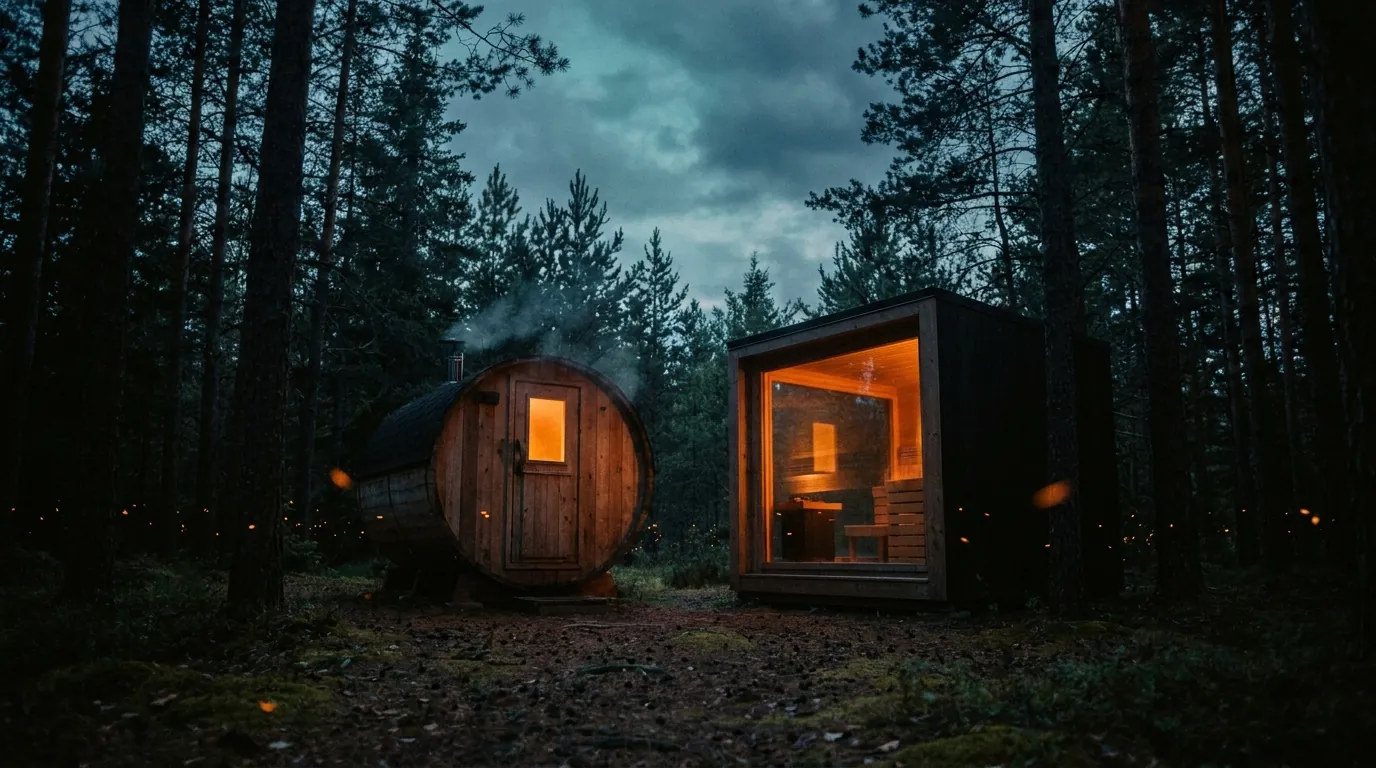
Most people choosing between infrared and traditional are really after the same thing: the health benefits. The recovery after training, the stress that lifts in the heat, the sweat, the long-term cardiovascular payoff the sauna research keeps pointing to. So the honest question is not which is "better," it is which type actually delivers the benefits you care about, and what each costs to live with. Infrared warms your body directly and gently and runs cheap; traditional heats the air, gets hotter, gives you steam, and carries the stronger evidence. Here is the real comparison, cost, heat, and health, side by side, so you buy the one that fits your body and your budget.
Side by side, on the things that matter
| Infrared | Traditional | |
|---|---|---|
| How it heats you | Warms your body directly with infrared | Heats the air, which heats you, plus steam |
| Air temperature | 120–150°F | 150–195°F |
| Warm-up time | 10–15 min | 30–45 min |
| Power | Often a 120V plug | Usually a 240V dedicated circuit |
| Cost per session | $0.25–0.75 | $1.25–2.50 |
| The experience | Gentle, dry, easy to sit longer | Intense, humid löyly when you pour water |
Cost-per-session figures are indicative, from typical unit power and a US average electricity rate, work out yours in the cost-to-run calculator. A traditional sauna can cost roughly four times more per session than an infrared one.
Which one is for you
- Buy infrared if you want low running cost, a unit that plugs into a normal outlet, fast warm-up, and a gentle heat you can sit in for longer. It suits most indoor, everyday setups. See the best infrared saunas.
- Buy traditional if you want the real thing: high heat, the smell of hot cedar, and löyly steam from water on the rocks. Accept the 240V circuit, the slower warm-up and the higher bill as the price of the ritual. See the barrel and cabin saunas.
A common mistake is buying on "better" when the honest answer is "different." If in doubt, most first-time buyers who want the authentic sauna feel go traditional; those who prioritise convenience and running cost, or who will use it daily, go infrared.
Does infrared give the same health benefits?
This is the question most comparisons dodge, so here is the honest version. The strongest evidence for sauna and health comes from traditional Finnish saunas. A long cohort study found frequent sauna use tracked with roughly half the cardiovascular death rate of once-weekly use (Laukkanen et al., JAMA Internal Medicine, 2015). It is an association, not proof of cause, but a strong and dose-dependent one, and it is heart health where the traditional sauna data is best.
Infrared saunas are far less studied. Because they run cooler and warm you with infrared light rather than heating the air, it is an open question whether they deliver the same cardiovascular effect, and the small trials that exist are promising but thin. So the fair position is this: traditional has the better research, infrared has the convenience and the lower running cost, and anyone claiming infrared simply matches the traditional heart-health data is going past what the studies show. We set out the full evidence, and where it gets overstated online, in the contrast therapy protocol. None of this is medical advice.
Two myths worth clearing. Infrared saunas do not produce steam, so there is no löyly, the water-on-the-rocks ritual belongs to traditional saunas only. And you do not have to pick one forever. Plenty of people run an infrared cabin on weekdays for convenience and use a traditional sauna for the full experience, or pair either with a cold plunge for contrast therapy.
Common questions
Is infrared or traditional better?
Different, not better. Infrared is gentle, cheap to run and plugs in; traditional is hotter, gives you steam, and needs 240V. Convenience versus ritual.
Which costs less to run?
Infrared, by a lot, roughly $0.25 to $0.75 a session versus $1.25 to $2.50 for traditional. Calculate yours.
Does infrared need 240V?
Usually no, most infrared cabins run on a 120V plug. Traditional almost always needs a 240V circuit and an electrician.
Sources & method
Temperature, warm-up and power characteristics are typical of the infrared and traditional saunas we review (see infrared, barrel and cabin saunas), July 2026. Cost-per-session figures are estimates from unit power and a US average electricity rate, not maker quotes, your rate changes them. Health claims are covered, with peer-reviewed citations, in our contrast therapy protocol; nothing here is medical advice.