Fire
Home saunas
A home sauna is a $5,000-15,000 decision with three questions hiding inside it: what shape, what heat, and what will it cost to run. Get those right and the brand almost picks itself. Here's the map.
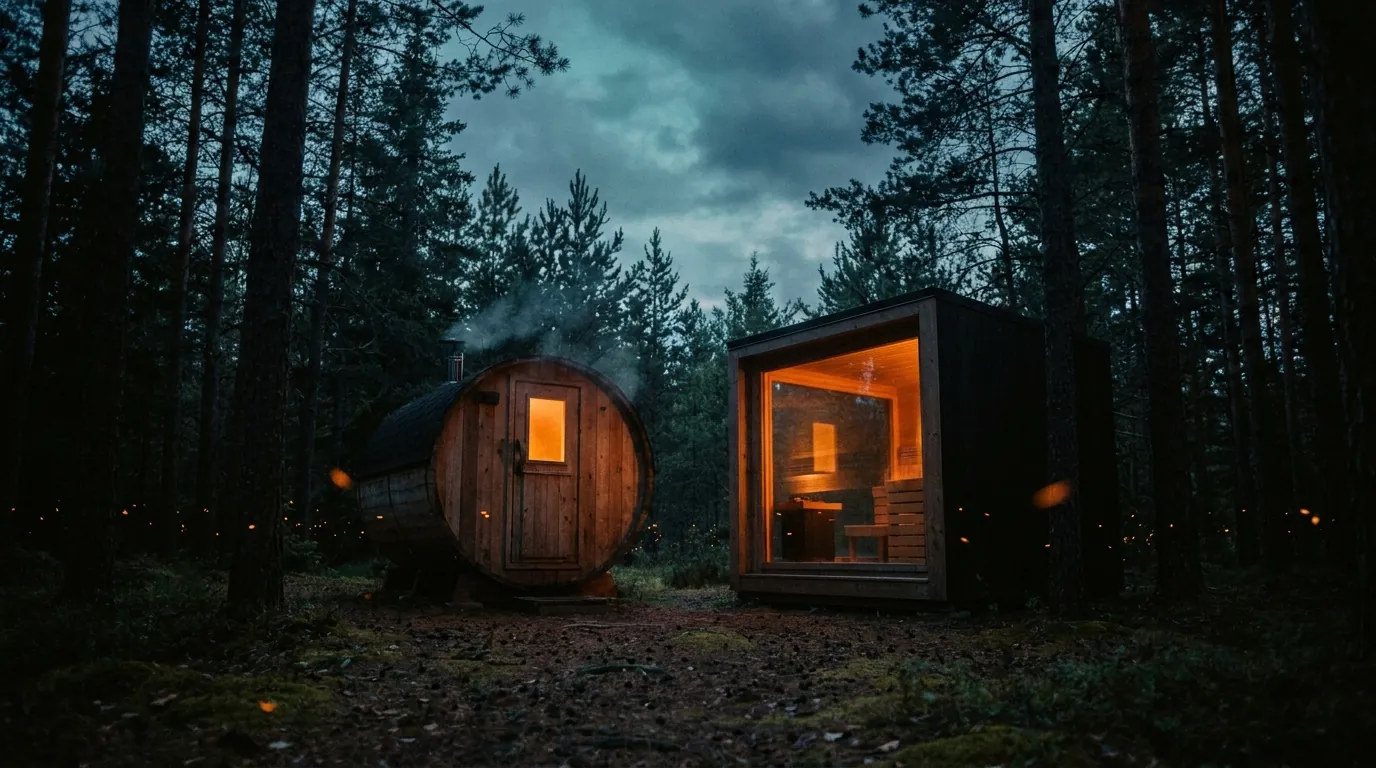
First, the shape
Barrel saunas
Cheapest way outdoors and the most photogenic, but uneven heat and higher running cost. →
Cabin saunas
Insulated, even heat, cheaper to run, the better buy for heavy or daily use. →
Then, the heat: traditional or infrared
Traditional saunas heat the air to 150-195°F with a stove and let you pour water for steam (löyly), the classic, intense experience. Infrared saunas warm your body directly at a gentler 120-150°F, are cheaper to run, and often plug into a standard 120V outlet. Neither is "better", traditional is the ritual, infrared is the low-effort, low-cost daily option. If in doubt, most first-time buyers who want the real sauna feel go traditional; those prioritising convenience and running cost go infrared. Buying for two? Our best 2-person saunas rank on footprint and power, the two things that decide whether one fits.
The cost everyone forgets: 240V
Most traditional cabins run a 6-9kW heater on a dedicated 240V circuit, often a $500-3,000 electrician job on top of the price. Smaller infrared units frequently avoid it with 120V. Factor the wiring in before you compare stickers, and work out the ongoing electricity in our cost-to-run calculator, a traditional sauna can cost four times more per session than an infrared one.
Pair it with cold
Most people who buy a sauna end up wanting the cold side too, heat then cold is the contrast-therapy ritual. If that's you, we've matched saunas and cold plunges into complete packages at four budgets so the two work together rather than as separate impulse buys, then read the contrast therapy protocol before your first session.